Natural Bedding • Pillow Guide
Down Pillows vs. Wool Pillows: Comparing Loft, Support, and Care
A pillow can feel cloud-soft in a shop and wrong by midnight. Down and wool are both natural fills, but they behave differently under the head, respond differently to moisture and pressure, and ask for different kinds of care. Knowing those differences is more useful than treating either material as an automatic shortcut to better sleep.
Published October 20, 2026
Down has a familiar promise: lightness, loft and a gentle, yielding feel. Wool offers a different proposition—springier resistance, a substantial hand and the ability to absorb moisture within its fibers. Neither description tells the whole story. A pillow’s support depends on its construction, fill quantity, shell, dimensions and the way it is maintained, as well as the sleeper’s position and preferences.
That distinction matters because “natural” is a description of origin, not a performance rating. A wool pillow can be soft or quite firm. A down pillow can feel airy and plush, or structured when it contains feathers or uses multiple chambers. The practical question is not which material wins, but which one is more likely to suit the way you sleep—and whether you are prepared to care for it.
First, what is inside the pillow?
Down consists of the soft clusters found beneath the outer feathers of waterfowl. Unlike a feather, a down cluster has no central quill. Its branching structure traps air, creating loft without much weight. This is why down is associated with a soft, compressible pillow that can be shaped or scrunched into position. Fill power, often stated on down products, describes the volume occupied by a given weight of down under a specified test. It can help indicate loft potential, but it does not, on its own, determine firmness or suitability.
Feathers are different: they have a central shaft and generally provide more structure. A pillow filled with feathers or a down-and-feather blend may feel firmer and more supportive than one filled primarily with down. The proportion, grade and arrangement of the filling all influence the result. A label that says “down pillow” may still describe a blend, so checking the fill composition is essential.
Wool pillow fill may be made from batting, compacted layers or small springy tufts sometimes called wool puffs or bolus. Its resilience can create a more buoyant, less fluid feel than down. Wool is also hygroscopic: its fibers can take up moisture vapor while still feeling comparatively dry to the touch. That property may help with perceived comfort, but it does not make every wool pillow cool in every bedroom. Cover fabric, room temperature, fill density and personal physiology matter too.
For either material, the shell is part of the experience. A tightly woven, down-proof cotton cover helps contain fine clusters. A cotton sateen shell may feel smooth; percale tends to feel crisper. Seams, baffles and internal chambers determine how filling moves—or stays put. Reading beyond the headline material gives a clearer picture of what the pillow is likely to feel like.
Loft: the pillow’s changing profile
Loft is the height a pillow maintains under use. It is not simply the height measured on a shelf. Down compresses readily when the head settles, then can regain volume when shaken or fluffed. That responsiveness makes it easy to mold: sleepers can fold, bunch or redistribute the fill to make a hollow or bolster. For some, that adaptability is a pleasure. For others, it means adjusting the pillow during the night.
Wool tends to have a more resilient, spring-like response. Depending on its construction, it may hold a relatively consistent shape rather than collapsing into a deep, soft cradle. Some wool pillows are adjustable, with removable fill that allows the sleeper to tune the height. Others are made from fixed batting and cannot be altered. Wool can settle with use; manufacturers may specify that initial compression is expected, so care and replacement expectations should be checked before purchase.
Loft is useful only in relation to posture. A side sleeper often needs enough height to fill the space between shoulder and head; a back sleeper commonly needs a lower profile that supports a neutral neck position; stomach sleepers often prefer a very low, soft pillow or none at all. These are starting points, not rules. Shoulder width, mattress firmness, body shape and individual comfort change the calculation.
A simple test at home is to lie in your usual position and notice whether your head tips up, drops down or feels level with the rest of your spine. A pillow that is too high can feel as unsuitable as one that is too flat. If you are comparing materials, assess each pillow for several nights when possible: a brief press with a hand does not reproduce the sustained weight and movement of sleep.
Support and firmness: comfort is construction
“Soft” and “supportive” are not opposites. Support means maintaining a comfortable, reasonably neutral position; firmness describes how much resistance a pillow offers when compressed. A soft pillow can support a sleeper if its loft and shape suit them. A firm pillow can still be a poor match if it holds the head at an awkward angle.
Down is usually prized for contouring rather than rigid support. It conforms to pressure and allows the sleeper to reshape the fill. That can suit people who like a yielding surface, but a very soft, low-fill pillow may compress too far for someone who needs more height. A down-and-feather blend, or a chambered design with a firmer core and softer outer layers, can provide more structure while retaining some plushness.
Wool commonly offers more resistance under pressure, though the range is broad. A densely filled, fixed wool pillow may feel substantial; a pillow with loose, adjustable wool tufts can be modified to create a softer or firmer profile. A wool-and-latex design, where available, is another construction altogether: the core supplies much of the structure, while wool acts as a surrounding layer. Such combinations should not be confused with a pillow filled entirely with wool.
The pillow should also work with the mattress. A sleeper on a yielding mattress may sink farther at the shoulder than someone on a firm surface, changing the gap the pillow needs to fill. When replacing a pillow, consider how your current one feels in your usual position, whether it stays comfortable through the night, and whether its height changes after compression. Those observations are more useful than choosing by material name alone.
Temperature and moisture: different fibers, different impressions
Down’s airy clusters trap still air, a useful source of insulation. In a pillow, that can feel cozy, but a light fill and breathable shell may also feel less dense than a tightly packed alternative. “Down sleeps cool” is too simple a claim: heat depends on fill amount, pillow cover, bedroom conditions, bedding layers and the sleeper. A pillow can feel warm to one person and comfortable to another.
Wool’s ability to absorb moisture vapor is often cited as a comfort advantage. It can take up moisture without immediately feeling wet, and the fiber’s structure supports air movement in some constructions. Still, no fill can regulate the whole sleep environment by itself. A humid room, heavy duvet or non-breathable pillow protector can influence comfort more than the filling. If temperature is a concern, look at the complete setup, including the cover and protector.
Both materials can be paired with cotton shells, but the weave and finish matter. A breathable fabric may allow more airflow than a coated or densely laminated cover. A protector can extend a pillow’s useful life, though it adds another layer between the sleeper and the fill. Check that the protector is washable and fits without compressing the pillow excessively.
Care: the difference between a washable shell and a washable pillow
Care instructions are not a minor detail. Many wool pillows should not be machine washed as a complete unit. Water and agitation can distort or compact the fill, and some manufacturers recommend spot cleaning only. Designs with a removable, washable cover simplify routine upkeep, but the wool insert may still need protection from spills and body oils. Airing and regular use of a pillow protector can reduce how often deeper cleaning is needed.
Down pillows may be washable, but washing is not automatically simple. Detergent residue can affect the fill, and moisture trapped in clusters can lead to clumping or lingering odor. Product instructions commonly call for a gentle cycle, mild detergent and thorough drying at low heat. Drying can take several cycles. A pillow that feels dry on the outside may remain damp inside, so follow the maker’s directions rather than relying on surface feel. Some products recommend professional laundering.
In either case, the care label takes precedence over generic advice. Avoid bleach and fabric softener unless instructions specifically permit them. Do not assume that a natural fiber is automatically easy to clean, or that “machine washable” applies to every component. Before buying, ask what can be washed, how often, whether the fill can be removed, and what happens if the pillow is saturated or stained.
Regular protection is usually simpler than frequent washing. A washable pillowcase and protector create practical barriers to oils, perspiration and spills. Fluffing a down pillow can help redistribute its clusters; wool designs may benefit from gentle handling according to their instructions. If a pillow develops persistent odor, visible damage or a lasting loss of shape, cleaning may not restore its original performance.
Allergies and sensitivities: avoid blanket promises
Natural fill is not a guarantee of hypoallergenic performance. People can react to different materials, and dust mites can be present in bedding regardless of whether the pillow contains down or wool. Processing, cleanliness, shell weave, moisture, household conditions and protective covers all play a role. Product descriptions sometimes use terms such as “hypoallergenic,” but the word does not establish that a pillow will be suitable for every individual.
For someone with a known allergy or respiratory condition, it is sensible to consult a qualified health professional and review the manufacturer’s specific information. Check whether the fill is washed, what the shell is made from, whether the cover is removable, and how the pillow can be cleaned. A densely woven protector may be useful for some people, but it should be selected with the advice of a clinician when allergy management is the concern.
Animal-derived materials raise questions beyond comfort. Down and feathers come from birds; wool comes from sheep. Certifications and sourcing statements can offer information about organic production or animal-welfare practices, but different standards address different issues. Read the scope of a certification rather than treating every label as interchangeable. A certified organic cotton shell, for example, does not by itself prove that the filling is organic.
A practical comparison
| Consideration | Down | Wool |
|---|---|---|
| Typical feel | Light, soft and highly moldable | Springier and often more substantial |
| Loft response | Compresses readily and can be fluffed back up | Often resists compression; construction and fill amount matter |
| Support potential | Varies from plush to structured, especially in blends or chambers | Can provide steady resistance; adjustable designs allow tuning |
| Moisture and warmth | Air-trapping clusters provide insulation; perceived warmth varies | Can absorb moisture vapor; comfort still depends on the full setup |
| Care pattern | May be washable, but needs careful and complete drying | Often spot clean only; removable covers may be washable |
The table describes tendencies, not guarantees. A low-fill down pillow may offer less lift than expected, while a well-constructed wool pillow can feel softer than its material name suggests. Product specifications, including fill composition, dimensions, adjustability and cleaning instructions, are the more reliable guide.
How to decide: start with the way you sleep
If you prefer a pillow that can be shaped into a cradle and then flattened or folded, down may be a natural candidate. A down-and-feather blend may suit someone who wants some of that soft contour with more resistance. Look for clear percentages and, where possible, information about the construction rather than relying on a generic description.
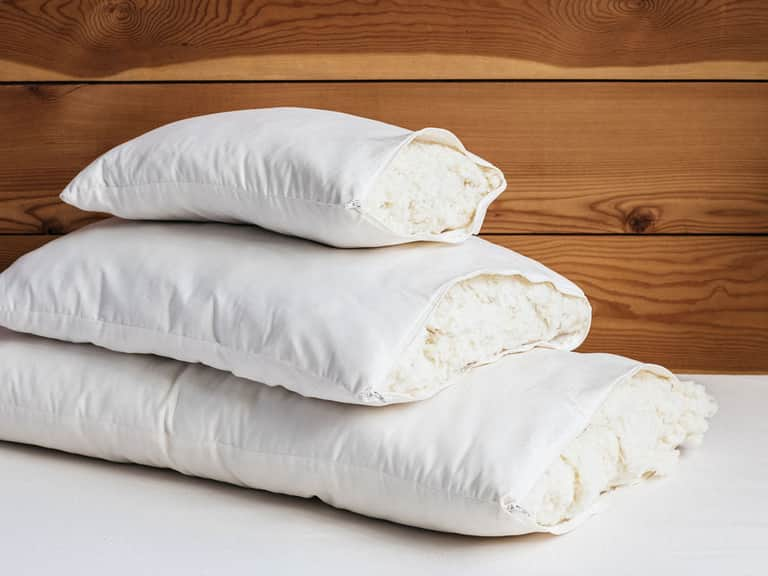
If you prefer a resilient feel, want to adjust the amount of filling, or are specifically looking for a wool-based option, examine wool pillows closely. A zippered design with removable wool puffs makes changes easier than a sealed, fixed-fill pillow. A fixed batting construction may be comfortable for some sleepers but offers less opportunity to alter height. Confirm whether the insert can be washed before assuming that a removable cover makes the whole pillow washable.
For side sleepers, the central issue is usually enough height to bridge the shoulder-to-head gap without pushing the neck upward. Back sleepers often look for a lower, supportive profile, while stomach sleepers may find less loft more comfortable. These are broad patterns, not medical prescriptions. If you have ongoing neck pain or other health concerns, seek professional advice rather than expecting a material change alone to solve the problem.
Whenever possible, choose a retailer with a clear trial or return policy and keep the packaging and care information until you have tested the pillow. Give a new pillow enough time to settle, but do not keep using one that consistently causes discomfort. A pillow is a personal piece of equipment: its success is measured at home, in your usual sleep position, not by its reputation.
Examples of wool constructions
For readers considering wool, two distinct designs illustrate why construction matters. The Organic Wooly Down Bed Pillow uses removable wool puffs inside a zippered organic cotton sateen case. Its fill can be added or removed to adjust firmness, while the case is washable and the wool fill is not. That separation between washable shell and non-washable filling is important to understand before use.
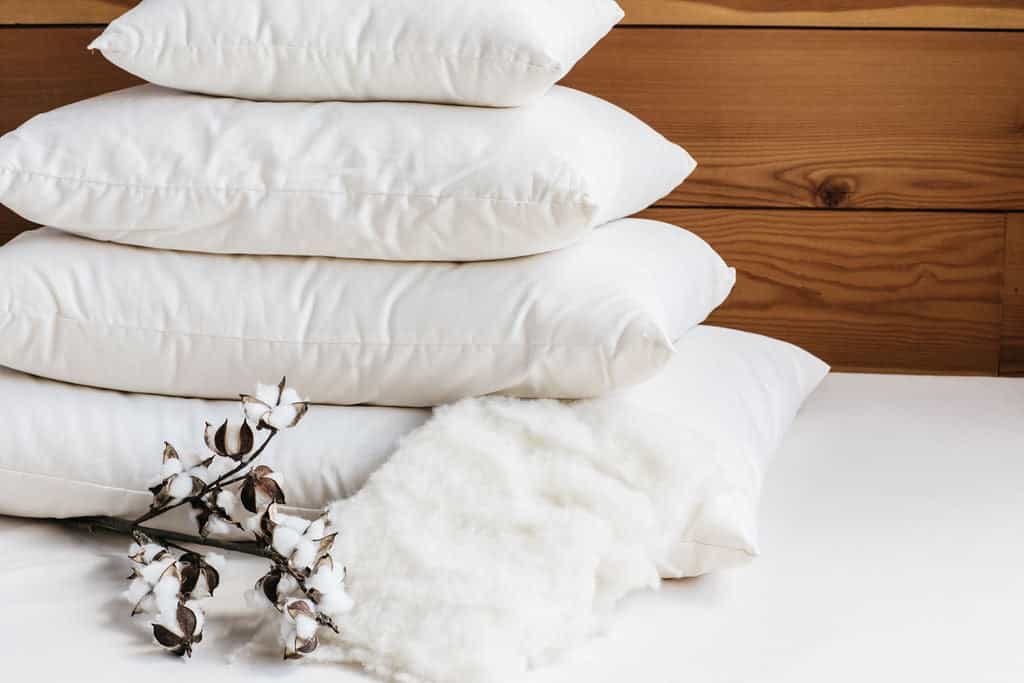
The Certified Organic Wool Bed Pillows use layered organic wool batting in an organic cotton sateen case. The construction is described as soft yet supportive, but the fill is not adjustable and the care guidance is spot cleaning. The product information also notes that wool fill may settle during the first months of use. These examples are not a universal verdict on wool; they show how two pillows made with the same broad fiber can offer different degrees of adjustability and different maintenance routines.
The bottom line
Down and wool answer different comfort preferences. Down is known for light, moldable softness and easy reshaping, while feather blends can add structure. Wool tends to feel more resilient and may help manage moisture within the fiber, but its firmness, loft and care demands vary substantially by design.
Choose by the combination of sleep position, desired height, preferred resistance, temperature comfort and willingness to follow care instructions. Check the actual fill, shell, construction and cleaning label. A natural pillow can be a thoughtful choice, but the material alone cannot promise perfect support, cooler sleep or freedom from allergens. The best pillow is the one that holds a comfortable position, feels right night after night and can be cared for in a way that fits real life.
Quick checklist before choosing
- Identify your usual sleep position and the pillow height it requires.
- Read the full fill composition: down, feathers, wool, or a blend.
- Check whether the pillow is adjustable, and whether adjustment changes loft or firmness.
- Confirm which parts can be washed and how the fill must be dried or cleaned.
- Treat allergy and animal-welfare claims as specific claims to verify, not universal guarantees.
- Use a suitable pillow protector and follow the manufacturer’s care instructions.